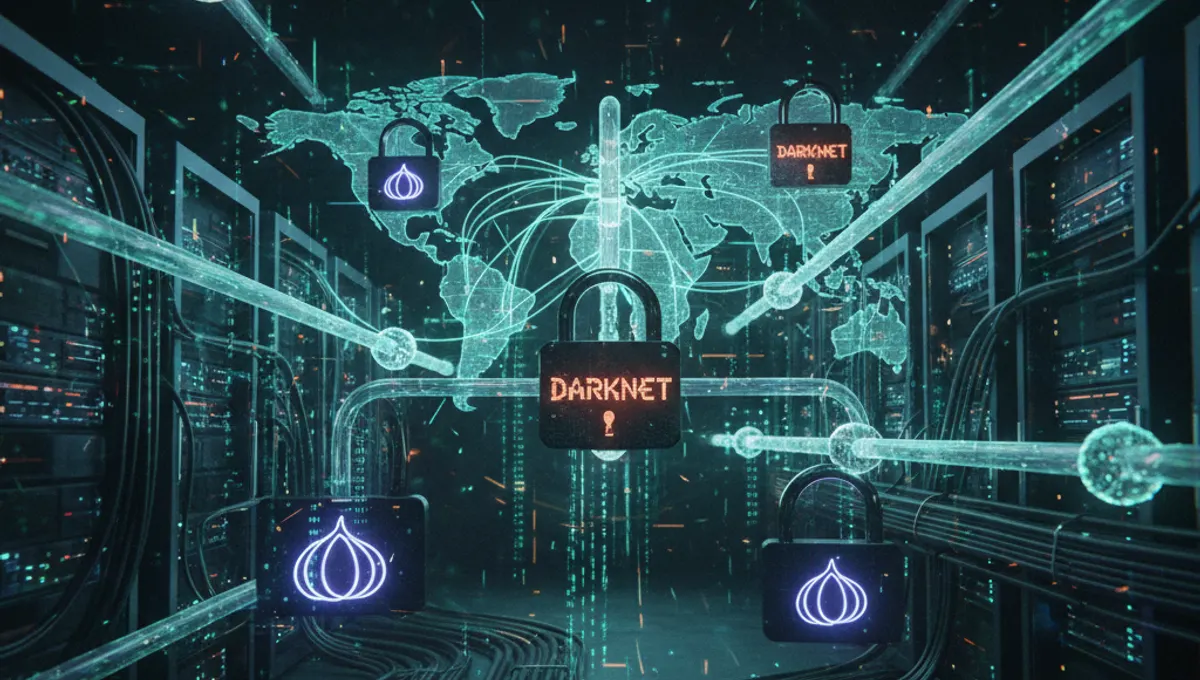
What Is a Dark Website URL
Dark website URLs are Tor onion addresses that serve hidden services. Unlike regular domain names, onion addresses are generated cryptographically and don't resolve through DNS. A typical onion URL contains 56 characters followed by .onion (v3 addresses). These addresses are not accessible through standard browsers or search engines. Instead, they require the Tor Browser to establish a connection through multiple relays. Dark website URLs provide anonymity for both the service operator and the visitor. The address itself reveals nothing about the server's location or the site's content. Onion addresses can host legitimate services like privacy-focused email, news sites, and forums, as well as illegal marketplaces. The technology behind them is neutral; the legality depends on what's hosted and how it's used.
How Dark Website URLs Work
When you visit a dark website URL, your Tor Browser connects to the Tor network and routes your traffic through multiple encrypted relays before reaching the destination. The onion address itself is derived from the server's public key, making it impossible to spoof or forge. The Tor network uses three-hop circuits: entry node, middle relay, and exit node. For onion services, the circuit is longer and more complex, with the server and client meeting at rendezvous points rather than the client connecting directly. This architecture ensures that neither the visitor nor the service operator can easily identify each other's IP address. The encryption is end-to-end, meaning even Tor exit nodes cannot see the content of your traffic when accessing .onion sites. This design makes dark website URLs inherently more private than accessing hidden services through exit nodes.
Finding Verified Dark Website URLs
Finding legitimate dark website URLs requires caution. Several methods exist: onion directories maintained by the community, search engines designed for the Tor network, and curated lists from privacy-focused organizations. Community-maintained wikis and directories list active onion addresses, though verification status varies. Tor-specific search engines index .onion sites and can help locate services by category. Check the 'Verified Market' section on this site for current, uptime-checked onion links across different categories. Never rely on a single source for onion addresses. Cross-reference multiple directories and check recent activity dates. Be aware that onion addresses change periodically for security reasons. Official projects like the Tor Project, Tails, and Whonix publish their onion addresses on their main websites. Phishing is common on the dark web; always verify addresses through multiple trusted sources before entering credentials or payment information.
Step-by-Step Access Guide
Step 1: Download Tor Browser from the official Tor Project website. Verify the signature to ensure authenticity. Step 2: Install Tor Browser on your device. It works on Windows, macOS, Linux, and Android. Step 3: Launch Tor Browser and allow it to connect to the Tor network. This may take 30-60 seconds. Step 4: Once connected, open a new tab and paste the onion address into the address bar. Step 5: Wait for the page to load. Onion sites are often slower than regular websites due to the routing through multiple relays. Step 6: Use the site as you would any regular website. Remember that your traffic is encrypted and routed through Tor. Do not maximize your browser window to full screen, as this can make fingerprinting easier. Keep Tor Browser updated to receive security patches.
Security and Anonymity Best Practices
Using Tor alone provides network-level anonymity, but additional precautions strengthen your security. Combine Tor with a VPN for added privacy, though this adds complexity. Connect to the VPN before launching Tor Browser to hide your Tor usage from your ISP. Never disable JavaScript in Tor Browser unless you understand the implications. Keep your operating system and all software updated. Use Tails or Whonix for maximum isolation if accessing sensitive dark websites. These are live operating systems designed for anonymity. Avoid maximizing your browser window, as unique screen resolutions can aid fingerprinting. Do not open files downloaded from onion sites in your regular browser. Use a dedicated offline machine or virtual machine for sensitive activities. Never enable plugins or extensions in Tor Browser. Disable WebRTC to prevent IP leaks. Use strong, unique passwords for any accounts created on dark websites. Consider using Bitwarden or similar open-source password managers.
Common Mistakes and Risks
Mistake 1: Assuming Tor makes you completely invisible. Tor protects your IP, but behavioral patterns, usernames, and content you post can identify you. Mistake 2: Using the same username across multiple dark websites. Create unique identities for different services. Mistake 3: Downloading files without caution. Malware is common on dark websites. Scan downloads with antivirus software and consider using a virtual machine. Mistake 4: Maximizing your browser window or changing default settings. These actions create a unique fingerprint that can identify you across sites. Mistake 5: Visiting dark websites with plugins enabled. Plugins can leak your real IP address. Mistake 6: Mixing Tor and non-Tor browsing in the same session. Use separate browsers or sessions. Mistake 7: Trusting unverified onion addresses. Phishing sites mimic legitimate services. Mistake 8: Assuming HTTPS is unnecessary on dark websites. Always use encrypted connections when available. Mistake 9: Ignoring security warnings from Tor Browser. These warnings exist for a reason.
Dark Website URLs vs. Regular Websites
Dark website URLs differ from regular URLs in several ways. Regular URLs use DNS resolution and are indexed by search engines. Dark website URLs are generated cryptographically and require Tor to access. Regular websites can be accessed from any browser; onion sites require Tor Browser. Regular websites typically reveal the server's location through IP address lookups. Onion addresses hide the server's location entirely. Regular websites use standard HTTPS encryption; onion sites use Tor's multi-layer encryption plus HTTPS. Regular websites can be monitored by ISPs; Tor traffic is encrypted at the ISP level. Regular websites are subject to standard domain registration and ICANN rules. Onion addresses are self-hosted and decentralized. Regular websites can be taken offline by targeting the server's IP. Onion services are more resilient to takedown attempts. Both can host legitimate or illegal content. The technology itself is neutral; the legality depends on use.
Frequently asked questions
Can I access dark website URLs without Tor Browser?
No. Onion addresses only work through the Tor network. Regular browsers cannot resolve .onion domains. Attempting to access them through a standard browser will fail. You must use Tor Browser or another Tor client to reach these sites.
Are all dark website URLs illegal?
No. Many onion sites host legitimate services like privacy-focused email, news archives, and forums. However, illegal marketplaces and content also exist on the dark web. The technology is neutral; legality depends on what's hosted and how it's used.
How do I know if a dark website URL is real or a phishing site?
Verify onion addresses through multiple trusted sources. Check the official website of the service you're looking for. Use curated directories that verify uptime and legitimacy. Never click links from untrusted sources. Bookmark verified addresses to avoid typos. Be suspicious of sites asking for passwords or payment information immediately.
Can my ISP see that I'm accessing dark website URLs?
Your ISP can see that you're using Tor, but they cannot see which onion sites you visit or what you do on them. The Tor connection itself is encrypted. If privacy from your ISP is critical, consider using a VPN before connecting to Tor.
What should I do if I encounter malware on a dark website?
Do not download files from untrusted sources. If you suspect malware, disconnect from the internet immediately and scan your system with antivirus software. Use a virtual machine for high-risk downloads. Keep backups of important files on an external drive. Consider using Tails or Whonix for maximum isolation.